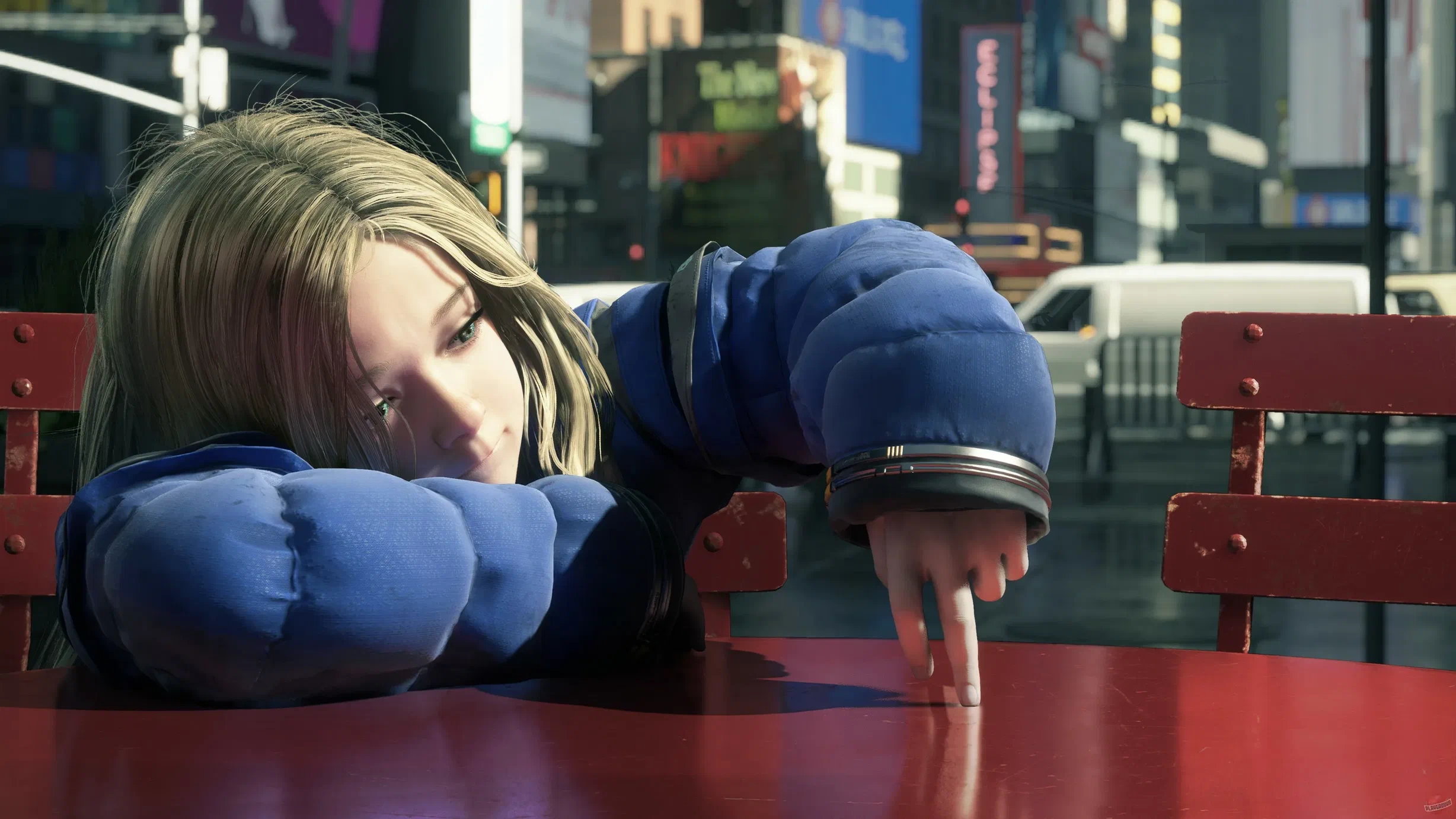
Capcom officially announced on April 20 that Pragmata, its first original franchise in eight years, surpassed one million copies sold worldwide within just two days of launch. For a brand-new IP with no pre-existing fanbase, the result is extraordinary, and it signals that audiences are hungry for quality single-player experiences with original worlds.
Pragmata is a sci-fi action-adventure game set on a lunar research facility called the Cradle, owned by the fictional Delphi Corporation. The player controls Hugh Williams, a systems engineer sent to investigate a communications blackout, and Diana, a child-like android, he encounters inside the facility. The two must cooperate to shut down IDUS, a rogue AI that has taken control of all robotic systems on the station, and find a way back to Earth.
Released on April 17 this year the game was built by Capcom on its proprietary RE Engine, the same technology powering Resident Evil 4 Remake and Dragon’s Dogma 2. The Switch 2 version launched globally with the rest of the platforms just one week later.
A Troubled but Triumphant Development
The road to Pragmata’s release was anything but smooth. The game was first revealed during Sony’s PlayStation 5 Future of Gaming showcase in June 2020, before the console had even launched, with a striking trailer featuring an astronaut, a ghostly cat, and a small girl on the moon. Capcom originally targeted a 2022 release.
What followed was years of silence and uncertainty. The game was pushed to 2023, then delayed indefinitely in June 2023. It wasn’t until the State of Play in June 2025 that Capcom resurfaced with a confirmed 2026 window. The final release date – April 24, 2026 – was announced at The Game Awards 2025, alongside a surprise reveal of Nintendo Switch 2 support and the release of a playable demo titled Pragmata: Sketchbook.
Director Cho Yonghee described the development process as one of “extensive trial and error,” particularly around the game’s core hacking mechanic. The visual design of Diana alone reportedly required years of iteration: Capcom wanted her to feel robotic yet emotionally resonant, eventually settling on a design that sits in the uncanny valley – human in appearance, but with subtle machine-like mannerisms that remind the player she is not.
Gameplay: Shooting and Hacking in Real Time
Pragmata’s defining mechanic is its dual-control system. Hugh handles combat from a third-person perspective, dodging with a jetpack and using an expanding arsenal of firearms. Diana, riding on his back, can hack enemies in real time: targeting a robot reveals a grid-based puzzle that, when solved, disables its armor or exposes weak points for Hugh to exploit.
The result is a combat loop that demands simultaneous attention on multiple fronts, managing enemy positions and ammunition while solving hacking grids under fire. Reviewers praised the system’s scalability: early encounters keep it accessible, while the mid-game and late-game significantly increase complexity. The game runs 10 to 15 hours, with New Game Plus and higher difficulty modes available for those who want more.
The Heart of the Game: Hugh and Diana
Critics and players agree: the emotional core of Pragmata is the relationship between Hugh and Diana. RPGSite called it “one of the closest approximations of a Pixar movie in video game form.” The Guardian gave the game four stars, describing it as a “beautifully made, heartfelt single player adventure” that handles its father-daughter dynamic “with surprising deftness.”
What distinguishes the pair from prior “dad-game” archetypes (The Last of Us, God of War) is Diana’s active role. She is not a burden to be protected, she is Hugh’s most essential weapon. The relationship is reciprocal from the start: Hugh provides warmth and human context, Diana provides the capability to survive. That functional interdependence gives the emotional beats a solid foundation.
AI, Humanity, and the Right Kind of Optimism
Pragmata arrives at a moment when public discourse around artificial intelligence has never been more fraught. The game’s world is built around a rogue AI and a lunar facility where 3D-printed replicas of Earth environments were constructed by workers desperate to maintain their sense of home. Capcom deliberately designed these spaces to look like generative AI output: slightly distorted, logically inconsistent, soulless facsimiles of human culture.
Space.com described this as making Pragmata “the timeliest sci-fi game of the year.” The game doesn’t present AI as a world-ending catastrophe, but as a contained, deeply unsettling thing that grows in the absence of human oversight, a more grounded and arguably more prescient warning than most science fiction delivers.
Why It Sold: The Anatomy of a Surprise Hit
The demo strategy paid off
Capcom released the Pragmata: Sketchbook demo in December 2025 on PC and February 2026 on consoles. By the time the game launched, the demo had accumulated over 2 million downloads and 2 million wishlists on Steam. Capcom’s own investor release credits these marketing initiatives as having “generated significant momentum”, and the community echoes this, with numerous purchasers citing the demo as what pushed them to commit to a full buy.
Nintendo Switch 2 expanded the audience
The simultaneous Switch 2 launch, with the UK physical chart showing the Switch 2 version accounting for 13% of day-one physical sales, meaningfully broadened the potential buyer pool. The Switch 2 port was praised by Nintendo Life as “the full package” and “another excellent Switch 2 port from Capcom.” Players who had never considered the title on other platforms were introduced through Nintendo’s storefront.
Six years of intrigue
Paradoxically, the long development may have helped. Pragmata’s mysterious 2020 reveal, an astronaut, a girl, a cat, and no explanation, built genuine long-term curiosity. When the game finally emerged with a concrete release date, there was a pent-up audience that had been waiting years to find out what it actually was.
Quality and critical reception
The game launched to overwhelmingly positive reviews. On Steam, 97% of over 4,700 user reviews are positive. On OpenCritic, 95% of critics recommend it. Metacritic describes its reception as “generally favorable.” Shacknews called it one of the best games of 2026 so far, and GamesRadar notes that Capcom now owns three of the top ten highest-rated games released in 2026.
The Capcom brand and hot streak
Capcom enters Pragmata’s launch on the back of Resident Evil Requiem (over 5 million copies sold since February 2026) and Monster Hunter Wilds (8 million in three days in 2025). Consumer trust in Capcom’s quality output is near an all-time high. Buyers willing to take a chance on a new IP were arguably more willing to do so under the Capcom banner than they might be with a less proven publisher.
Pragmata is among the most technically ambitious RE Engine titles to date. On PC, the game supports full path tracing, developed in collaboration with Nvidia over 18 months, enabling what engine support manager Masaru Ijuin described as “cinematic quality visuals reminiscent of high-end sci-fi films.” On PlayStation 5 Pro, it runs at native 4K at 60 fps. The game also features a physics-based strand hair system developed specifically to simulate Diana’s long hair accurately, a technology extension that required collaboration between Capcom’s game team and RE Engine developers.
What’s Next: DLC, Sequels, and Capcom’s Intentions
Capcom has not announced a story DLC or sequel for Pragmata. However, the developer’s own statement at the million-copy milestone announcement leaves the door clearly open: “Moving forward, we will continue making every effort to deliver the appeal of Pragmata to an even broader audience.”
Currently available post-launch content is limited to the Shelter Variety Pack, a cosmetic DLC bundle included in the Digital Deluxe Edition that adds outfits, weapon skins, music, gestures, and an art gallery. These cosmetics are expected to be sold individually post-launch as well.
Pocket Tactics noted that Capcom’s statement “whether that means story DLC or something else entirely, you certainly haven’t heard the last of Pragmata.” PC Gamer’s reviewer expressed a desire to see the game get a sequel. Given the sales performance, a follow-up seems commercially viable. The question is whether Capcom’s next move is expansion content for this entry or a full sequel developed over several years.
Pragmata is a notable achievement on multiple levels. As a game, it delivers a tightly crafted, emotionally resonant single-player experience that earns its comparisons to the best of the genre. As a commercial story, it demonstrates that original IP can succeed without franchise scaffolding, provided the quality is there, the marketing is smart, and the platform strategy is broad. Capcom took six years, three delays, and a bet on younger developers to get here. The result is one of the defining releases of 2026 so far.